In today’s uncertain world, financial stability is not a luxury — it’s a necessity. Whether you are a student, a salaried employee, or a freelancer, having an emergency fund can protect you from unexpected financial shocks like medical emergencies, job loss, urgent home repairs, or family needs.
If you live in India and think saving money is difficult because of limited income or high expenses — this guide is for you. Let’s break it down step by step and create a practical 6-month action plan.
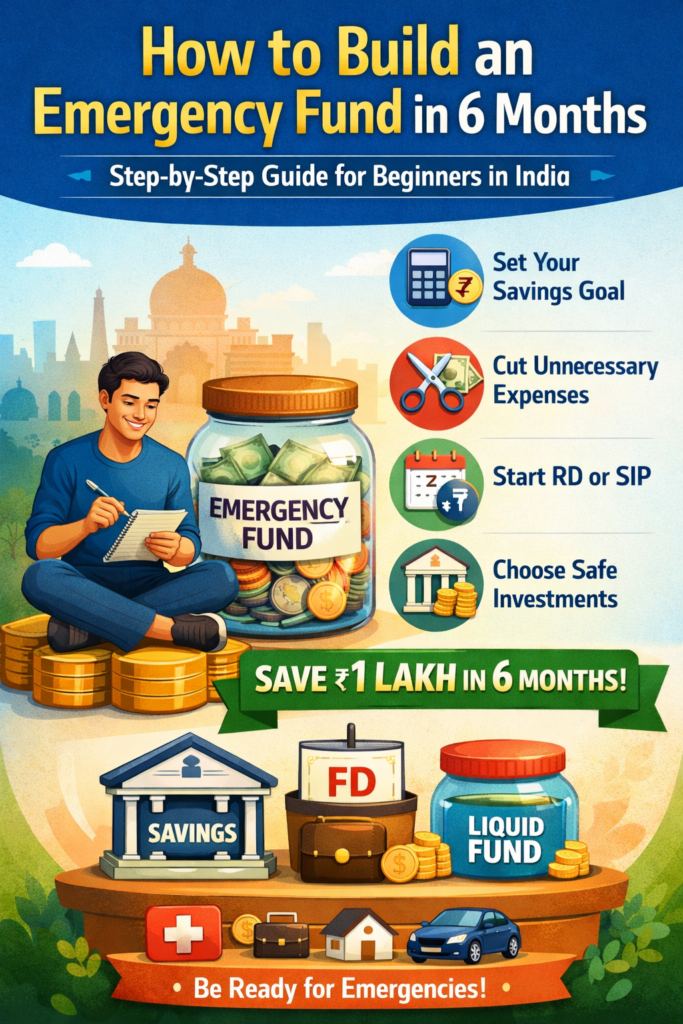
What Is an Emergency Fund?
An emergency fund is a separate pool of money kept aside strictly for unexpected situations. It is not for shopping, vacations, or gadgets. It is your financial safety net.
Think of it as your personal insurance against life’s surprises.
🇮🇳 Why Every Indian Needs an Emergency Fund
In India, many families depend on a single earning member. Medical expenses are rising, job markets are competitive, and unexpected expenses can disturb your entire financial plan.
Here’s why it’s crucial:
- 🏥 Medical emergencies can cost lakhs
- 💼 Job loss can happen anytime
- 🏠 Sudden home repairs or family obligations
- 📉 Business or freelance income fluctuations
Without savings, people often rely on credit cards or loans, which create long-term debt problems.
💡 How Much Should You Save?
The general rule is:
Save 3 to 6 months of your essential expenses
Example:
If your monthly essential expenses are ₹20,000
You should aim for ₹60,000 to ₹1,20,000.
If you are a freelancer or business owner, try to save closer to 6 months.
🚀 Step-by-Step Plan to Build Your Emergency Fund in 6 Months
Step 1: Calculate Your Monthly Essential Expenses
List only necessary expenses:
- Rent
- Food
- Electricity
- Transportation
- EMIs
- Basic groceries
Ignore luxury spending.
Step 2: Set a Clear 6-Month Target
Let’s say your target is ₹60,000.
To build it in 6 months:
₹60,000 ÷ 6 = ₹10,000 per month
Now you have a clear monthly saving goal.
Step 3: Track & Cut Unnecessary Expenses
Start tracking your spending using apps like:
- Expense tracker apps
- UPI transaction history
- Simple Excel sheet
Common areas to cut:
- Online food orders
- Unused subscriptions
- Impulse shopping
- Frequent Swiggy/Zomato orders
Even saving ₹200–₹300 daily can create a big difference.
Step 4: Automate Your Savings
Automation is powerful.
Set up:
- Recurring Deposit (RD)
- Auto-transfer to a separate savings account
- SIP in low-risk liquid mutual funds
When money moves automatically, you won’t feel tempted to spend it.
Step 5: Increase Your Income (Optional but Powerful)
If saving feels difficult, try:
- Freelancing
- Selling digital products
- Part-time online work
- Tutoring
- Reselling
Even ₹3,000–₹5,000 extra monthly can speed up your goal.
Where Should You Keep Your Emergency Fund in India?
Your emergency fund must be:
- Safe
- Easily accessible
- Low risk
Here are good options:
1 Savings Account
Best for immediate access.
2 Fixed Deposit (FD)
Slightly better interest, but ensure premature withdrawal is allowed.
3 Liquid Mutual Funds
Low risk and better returns than savings accounts (ideal for short-term safety).
Avoid stock market or crypto for emergency funds — they are too volatile.
⚠️ Common Mistakes to Avoid
- Investing emergency money in stocks
- Mixing it with daily spending account
- Using it for shopping or travel
- Not rebuilding it after using
Remember, this fund is only for real emergencies.
6-Month Emergency Fund Checklist
✔ Calculate monthly expenses
✔ Fix total target amount
✔ Divide into monthly savings goal
✔ Automate transfers
✔ Store in safe instruments
✔ Review progress monthly
🎯 Final Thoughts
Building an emergency fund is not about earning a lot of money — it’s about financial discipline. Even if you start small, consistency matters more than the amount.
In just 6 months, you can create financial peace of mind and protect yourself from debt traps.
Start today. Your future self will thank you.
Leave a Reply